
A hemp derived THC beverage contains THC sourced from hemp rather than marijuana. The terminology can be confusing because “hemp-derived” describes the source of the cannabinoid, while Delta-9 THC identifies the specific cannabinoid itself. Delta-9 THC is the form of THC commonly associated with the intoxicating effects of cannabis. For consumers comparing hemp THC drinks, understanding these terms makes it easier to read product labels and evaluate what is actually in a beverage.
A product’s hemp-derived status does not tell you everything about its formulation. You still need to check the amount of Delta-9 THC, the serving size, other cannabinoids, ingredients and available laboratory testing. Legal treatment can also vary by state, so a product being marketed as hemp-derived should not be treated as a nationwide guarantee of legality. A careful review of the product information and applicable local requirements is a better starting point.
What Is a Hemp-Derived THC Beverage?
A hemp-derived THC beverage is a drink or beverage additive containing THC obtained from hemp. Delta-9 THC is one of the cannabinoids that may be present in hemp-derived products. The amount of THC can vary considerably between products, which is why the label and serving information matter.
The term “hemp-derived” refers to where the cannabinoid comes from, not to the absence of THC. A hemp product can contain Delta-9 THC and may therefore produce intoxicating effects. Consumers should check the actual cannabinoid content instead of assuming that hemp products are automatically non-intoxicating. Product descriptions, labels and laboratory reports can provide more useful information than the word “hemp” alone.
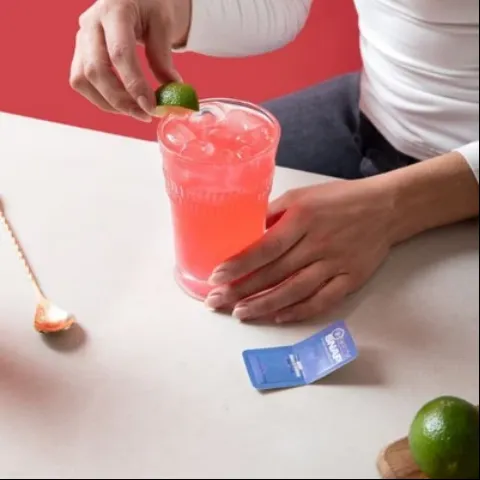
Beezy Snaps describes its product as a hemp-derived Delta-9 THC drink enhancer. Its current product page lists two options, including 8 mg Delta-9 THC with 8 mg full-spectrum CBD and 4 mg Delta-9 THC with 4 mg full-spectrum CBD per Snap.
What Does Delta-9 THC Mean?
Delta-9 THC is a specific cannabinoid found in cannabis plants, including hemp. It is different from CBD, which does not produce the same intoxicating effects as Delta-9 THC. When consumers see “Delta-9 THC” on a beverage label, the number next to it indicates how much of that cannabinoid is present.
The amount per serving is particularly useful when comparing products. A package containing multiple servings can have considerably more total THC than the amount provided in one serving. This is why consumers should look at both the total package content and the stated serving amount. Following the manufacturer’s serving instructions also helps keep the amount consumed clear.
How Much Delta-9 THC Is in a Beverage?
THC content is generally expressed in milligrams. For a beverage enhancer, the relevant number is usually the amount of THC provided by the recommended serving of the enhancer. The amount of liquid or the size of the finished beverage does not necessarily tell you how much THC is present.
Before choosing a product, check:
● Delta-9 THC per serving
● Total servings in the package
● Total THC in the package
● CBD and other listed cannabinoids
● Recommended serving instructions
● Available laboratory testing
Beezy Snaps currently lists 4 mg and 8 mg Delta-9 THC options, with each Snap also containing the same amount of full-spectrum CBD.Consumers should still check the current product label and instructions before use because product formulations and information can change.
Hemp and Marijuana Are Not the Same Thing
“Hemp” and “marijuana” are terms used to distinguish categories of cannabis under U.S. law, but the terminology can become complicated when discussing individual cannabinoids. Hemp-derived THC and marijuana-derived THC can contain the same Delta-9 THC molecule. The source of the cannabinoid does not change the basic identity of Delta-9 THC.
The distinction can matter for how a product is classified and regulated. Federal and state rules may treat hemp-derived products differently from marijuana products, while individual states can impose additional requirements. Consumers should therefore avoid assuming that the word “hemp” provides a complete answer about a product’s legal status.
Hemp-Derived THC vs. Marijuana-Derived THC
The main distinction is the source of the THC and the regulatory framework that applies to the product. Hemp-derived THC comes from hemp, while marijuana-derived THC comes from cannabis that falls under the marijuana classification used by applicable law. Both can contain Delta-9 THC.
For consumers, the practical questions are more specific:
● Where was the THC sourced?
● How much Delta-9 THC is in each serving?
● What other cannabinoids are present?
● Has the product been independently tested?
● Can the product legally be sold and shipped to the intended location?
These questions provide more useful information than simply comparing the words “hemp” and “marijuana.” They also help consumers distinguish between the source of a cannabinoid and the characteristics of the finished beverage.
How Do Hemp THC Drinks Differ From Other Cannabis Products?
Hemp THC drinks can take several forms. Some are ready-to-drink beverages, while others are concentrated liquid products designed to be added to another drink. A liquid format can allow the consumer to select a preferred base beverage rather than purchasing a pre-mixed drink.
Beezy Snaps uses a pocket-sized Snap format that is designed to be added to a beverage. The manufacturer describes the product as suitable for sparkling water, cocktails, mocktails and other drinks. This format differs from a canned THC beverage because the cannabinoid-containing component and the base drink are separate.
A liquid THC drink mix can therefore be evaluated based on both the cannabinoid formulation and the way it is intended to be incorporated into a beverage. Consumers should follow the specific instructions provided with the product rather than assuming that every liquid THC product works in exactly the same way.
Why Product Testing Matters
Laboratory testing can provide useful information about the contents of a cannabinoid product. A Certificate of Analysis, commonly called a COA, is a laboratory report associated with a tested sample or batch. It can provide cannabinoid results that consumers can compare with information on the product label.
Testing does not eliminate the need to read the label or understand applicable regulations. Instead, it provides another source of information when assessing a product. Beezy Snaps publishes laboratory reports for its listed 4 mg and 8 mg formulations on its website.
What Should You Check on a THC Beverage Lab Report?
A laboratory report should provide enough information to identify the tested product or batch and show the relevant cannabinoid results. The exact format can vary between laboratories, so consumers should read the report rather than relying only on a “lab tested” statement.
Look for:
● Product or batch identification
● Delta-9 THC results
● CBD results where applicable
● Other cannabinoid results
● Laboratory identification
● Testing date or report date where available
If the information on a COA appears different from the product label, contact the manufacturer before making a purchase. The report is most useful when it can be connected clearly to the product being considered.
Read the Label Before You Buy
The product name alone does not provide enough information to assess a hemp-derived THC beverage. Start with the cannabinoid amounts and serving information. Then check the complete ingredient list and any available preparation or storage instructions.
A product containing both THC and CBD should be assessed based on the amount of each cannabinoid. Beezy Snaps states that its current Snap formulations use a 1:1 ratio of Delta-9 THC to full-spectrum CBD. That information is useful because it gives consumers more detail about the formulation than a simple “THC drink” description.
Are Hemp-Derived THC Drinks Legal?
The legal status of hemp-derived THC beverages is more complicated than a simple yes or no answer. Federal law and individual state laws can apply different requirements to hemp-derived cannabinoid products. States may establish their own restrictions involving sales, possession, age requirements, product formulation or shipping.
For that reason, consumers should check the rules that apply to their location and the specific product. Retailers may also restrict shipments to certain states. Beezy Snaps currently states that it does not ship its products to Idaho, Tennessee, Utah or Wyoming.
Why State Laws Matter
State requirements can change and may differ substantially. A product that can be purchased in one state may face restrictions in another. Shipping availability can also differ from general product availability on a website.
Before ordering, check:
● Current state requirements
● Local restrictions where applicable
● Minimum age requirements
● Retailer shipping policies
● Product-specific restrictions
● Current product documentation
Do not rely solely on an older article, social media post or general statement about hemp-derived THC. Current information from the relevant state authorities and the retailer is more appropriate when determining whether a product can be purchased or shipped to a particular location.
What Should You Check Before Ordering a Hemp THC Beverage?
Product research does not have to be complicated. A short checklist can help you identify the most relevant information before placing an order. The goal is to understand the product’s contents, serving information and purchase requirements.
Check the following:
● Delta-9 THC amount per serving
● CBD and other cannabinoid content
● Complete ingredient list
● Recommended serving instructions
● Available COA or laboratory report
● Age requirements
● Shipping availability
● State and local requirements
● Storage information
These details are especially useful when comparing a THC drink mixer USA with a ready-to-drink cannabis beverage. The format may differ, but the same basic questions about dosage, ingredients, testing and legal requirements still apply.
Common Misunderstandings About Hemp-Derived THC
“Hemp-Derived” Means THC-Free
This is incorrect. Hemp-derived products can contain cannabinoids, including Delta-9 THC. The actual amount depends on the product’s formulation, so the label should always be checked.
Hemp-Derived THC Cannot Be Intoxicating
Delta-9 THC can produce intoxicating effects regardless of whether it was sourced from hemp or marijuana. The source does not remove the characteristics associated with the cannabinoid. Consumers should therefore treat THC-containing products accordingly and follow the manufacturer’s instructions.
All Hemp THC Drinks Follow the Same Rules
They do not necessarily follow identical rules across the United States. State and local requirements can vary, and retailers can also impose shipping restrictions. Checking current information for the specific product and destination is the safer approach.
Understanding the Label Before Choosing a Product
A hemp-derived THC beverage can be easier to understand once the terminology is separated into its individual parts. “Hemp-derived” describes the source, while “Delta-9 THC” identifies a specific cannabinoid. The amount of Delta-9 THC per serving tells you more about the product’s potency than the word “hemp” alone.
For consumers considering a liquid beverage format, Beezy Snaps offers a liquid THC drink mix that combines Delta-9 THC with full-spectrum CBD. The product is available in 4 mg and 8 mg THC options according to its current product information.
Before purchasing any hemp-derived THC beverage, review the current label, cannabinoid profile, laboratory documentation and applicable requirements. If you have questions about the product or its documentation, you can contact Beezy Snaps directly.
Conclusion
Understanding hemp-derived THC beverages starts with separating the terminology from the product details. Hemp identifies the source, while Delta-9 THC identifies the cannabinoid, and the amount per serving provides important information about potency. Laboratory testing, ingredient lists and clear serving instructions can help consumers evaluate the product more carefully. Since laws and shipping rules can differ by location, current state requirements should also be checked before purchasing.
For anyone researching hemp THC drinks, the most useful approach is to focus on information that can be verified. Read the label, review available testing documentation and confirm the requirements that apply to the product and destination.
Frequently Asked Questions
1. What is a hemp-derived THC beverage?
A hemp-derived THC beverage is a drink or beverage additive containing THC sourced from hemp. The product may contain Delta-9 THC along with other cannabinoids such as CBD. The exact formulation varies by product, so the label should be checked before use.
2. Is hemp-derived Delta-9 THC the same cannabinoid as Delta-9 THC from marijuana?
Yes, Delta-9 THC refers to the same cannabinoid. The distinction relates to the source of the THC and the regulatory framework that applies to the resulting product. Consumers should check the product’s cannabinoid content and applicable laws rather than relying only on the source.
3. How can I check the amount of THC in a hemp beverage?
Look for the Delta-9 THC amount listed in milligrams per serving. Also check the total number of servings and total THC in the package. If available, a Certificate of Analysis can provide additional laboratory information about cannabinoid content.
4. Are hemp-derived THC drinks legal in every state?
State laws and restrictions can vary, so there is no single answer that applies to every location. Some retailers also restrict shipping to particular states. Consumers should check current state requirements and the retailer’s shipping policy before ordering.
5. What is the difference between a THC drink and a THC drink mixer?
A THC drink is generally a finished beverage containing cannabinoids, while a THC drink mixer or enhancer is designed to be added to another beverage. Beezy Snaps uses a Snap format that is added to a drink, allowing the consumer to choose the base beverage.
