
Quick Answer
Resin flooring dubai provides a seamless, chemical- and impact-resistant surface widely used in Dubai and Abu Dhabi for warehouses, gyms, garages, and commercial kitchens. Combined with specialized gym flooring and durable floor paint, it forms a core part of industrial and fitness facility fit-outs across the UAE. Risala Furniture and Interiors LLC supplies and installs resin flooring, gym flooring abu dhabi, and floor paint systems for clients in Dubai and Abu Dhabi.
Key Facts Table
| Fact | Detail |
| Common resin flooring types | Epoxy resin, polyurethane (PU) resin, polyaspartic |
| Typical resin cure time | 24–72 hours depending on system and thickness |
| Gym flooring materials | Rubber tiles/rolls, resin-based systems |
| Floor paint use case | Warehouses, garages, parking areas, workshops |
| Chemical resistance benefit | Resists oils, cleaning agents, and light acids common in industrial settings |
| Recommended reapplication | Floor paint touch-up every 3–5 years depending on traffic |
Introduction
Industrial, commercial, and fitness spaces in Dubai and Abu Dhabi need flooring that can handle heavy use without constant repair. Resin flooring, gym flooring, and floor paint dubai each solve a specific problem — chemical resistance, impact absorption, and cost-effective surface protection, respectively. This guide breaks down when to use each, what to expect during installation, and how they compare.
What Is Resin Flooring and Where Is It Used?
Resin flooring refers to seamless floor systems made from materials like epoxy or polyurethane resin, applied in liquid form and cured into a hard, durable surface. Because it has no grout lines or seams, it resists dust accumulation and is easy to clean — a major reason it’s favored in commercial kitchens, laboratories, and warehouses across the UAE.
Common Applications for Resin Flooring
- Warehouses and logistics facilities — handles heavy forklift and pallet traffic.
- Commercial kitchens — resists oil, grease, and frequent washing.
- Garages and workshops — chemical and impact resistant.
- Retail and showroom floors — offers a clean, glossy finish.
- Laboratories and cleanrooms — supports hygiene and chemical-resistance requirements.
Gym Flooring in Abu Dhabi and Dubai
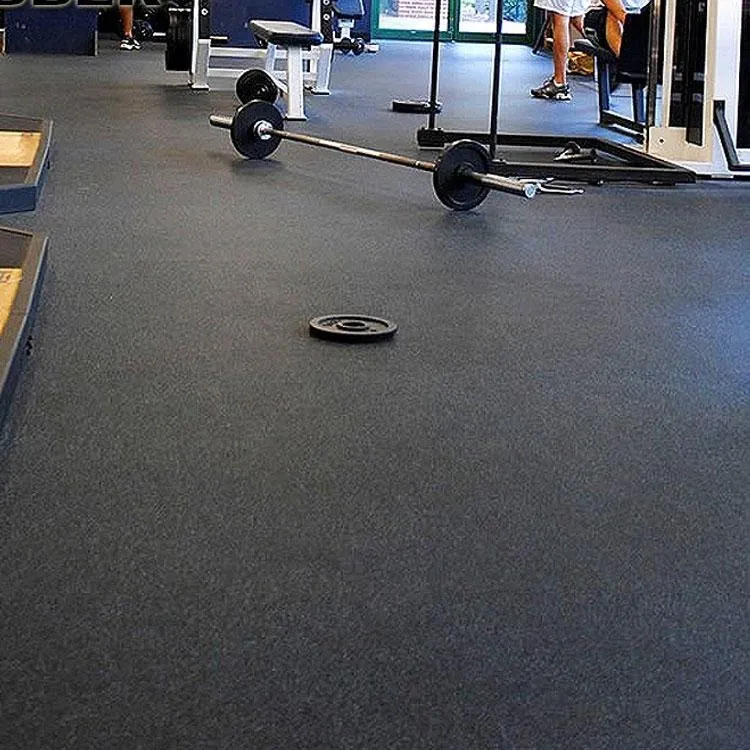
Gym flooring needs to absorb impact from dropped weights, resist sweat and moisture, and provide safe traction for training. Rubber tiles and rolls remain the most common choice for weightlifting zones, while resin-based systems are sometimes used in cardio or studio areas for a smoother, easier-to-clean finish.
Choosing Gym Flooring: What Matters Most
- Impact absorption for weight-drop zones.
- Thickness — typically 15mm–30mm for serious free-weight areas.
- Odor and moisture resistance to handle sweat exposure.
- Slip resistance for safety during high-intensity training.
Floor Paint: A Cost-Effective Protective Layer
Floor paint, particularly epoxy-based paint, is often chosen for garages, parking structures, and light industrial areas where a full resin system isn’t necessary but surface protection and a cleaner appearance are still priorities. It’s generally more affordable than full resin flooring but has a shorter maintenance cycle.
Flooring Systems Comparison Table
| Feature | Resin Flooring | Gym Flooring (Rubber) | Floor Paint |
| Best use | Warehouses, kitchens, labs | Gyms, fitness studios | Garages, parking, light industrial |
| Durability | Very high | High | Moderate |
| Chemical resistance | Excellent | Moderate | Good |
| Cost | Higher upfront | Mid-range | Most affordable |
| Reapplication interval | Rare with proper care | Rare | Every 3–5 years |
Step-by-Step: Installing Resin Flooring or Gym Flooring
- Surface assessment — checking substrate condition, moisture levels, and existing damage.
- Surface preparation — grinding or shot-blasting concrete to ensure proper adhesion.
- Primer application — for resin systems, to bond the resin layer to the substrate.
- Main layer application — resin coating or gym tile/roll installation.
- Curing period — typically 24–72 hours before the area is usable.
- Final inspection — checking for bubbles, unevenness, or seam issues.
Actionable Tips
- For warehouse resin flooring, specify slip-resistant additives if the area handles liquids or oils regularly.
- Choose gym flooring thickness based on the heaviest equipment used — free-weight areas need more cushioning than cardio zones.
- For floor paint in parking structures, opt for UV-stable formulas if any area is exposed to direct sunlight.
- Always confirm substrate moisture testing before resin application, as trapped moisture can cause bubbling or delamination.
- Schedule floor paint touch-ups proactively every 3–5 years rather than waiting for visible wear.
Frequently Asked Questions
1. What is the difference between epoxy and polyurethane resin flooring? Epoxy resin is generally more rigid and chemical-resistant, while polyurethane resin offers greater flexibility and better resistance to UV yellowing and abrasion.
2. How long does resin flooring take to cure? Curing typically takes 24–72 hours depending on the resin system and ambient temperature, though full chemical cure can take longer.
3. Is rubber or resin flooring better for a home gym? Rubber flooring is generally preferred for free-weight areas due to superior shock absorption, while resin suits cardio or studio zones needing a smoother finish.
4. Can floor paint be applied over old, cracked concrete? Cracks and damage typically need repair before floor paint application to ensure proper adhesion and a smooth finish.
5. How often does floor paint need reapplication? Depending on traffic levels, floor paint generally needs touch-ups or reapplication every 3–5 years.
6. Is resin flooring suitable for commercial kitchens? Yes, its seamless, easy-to-clean surface and resistance to oils and grease make it a common choice for commercial kitchens.
7. What thickness of gym flooring is recommended for weightlifting areas? Thicknesses of 20mm–30mm are commonly recommended for areas with heavy free-weight use.
8. Does resin flooring work well in humid climates like the UAE? Yes, when properly installed with correct moisture barrier preparation, resin flooring performs well in the UAE’s humid conditions.
9. Can floor paint be used in outdoor parking areas? Yes, UV-stable epoxy or polyurethane floor paints are commonly used in outdoor and semi-outdoor parking structures.
10. Does Risala Furniture and Interiors LLC supply both indoor and outdoor furniture? Yes, Risala Furniture and Interiors LLC supplies outdoor furniture, recliners, and coffee tables for both residential and hospitality projects across Abu Dhabi and Dubai.
Key Takeaways
- Resin flooring offers a seamless, chemical-resistant surface ideal for warehouses, kitchens, and labs.
- Gym flooring choice should match the specific training use — free weights need thicker, more cushioned surfaces.
- Floor paint is a cost-effective option for garages and parking areas but needs periodic reapplication.
- Risala Furniture and Interiors LLC delivers all three flooring solutions across Dubai and Abu Dhabi.
Conclusion
Choosing between resin flooring, gym flooring, and floor paint depends on how the space is used, expected traffic, and budget. Each solution offers a different balance of durability, cost, and maintenance. Risala Furniture and Interiors LLC provides end-to-end supply and installation of resin flooring, gym flooring, and floor paint systems across Dubai and Abu Dhabi.
📍 Find us on the map:maps.app.goo.gl/igmNHkW1QCyL19wT7?g_st=ac
