
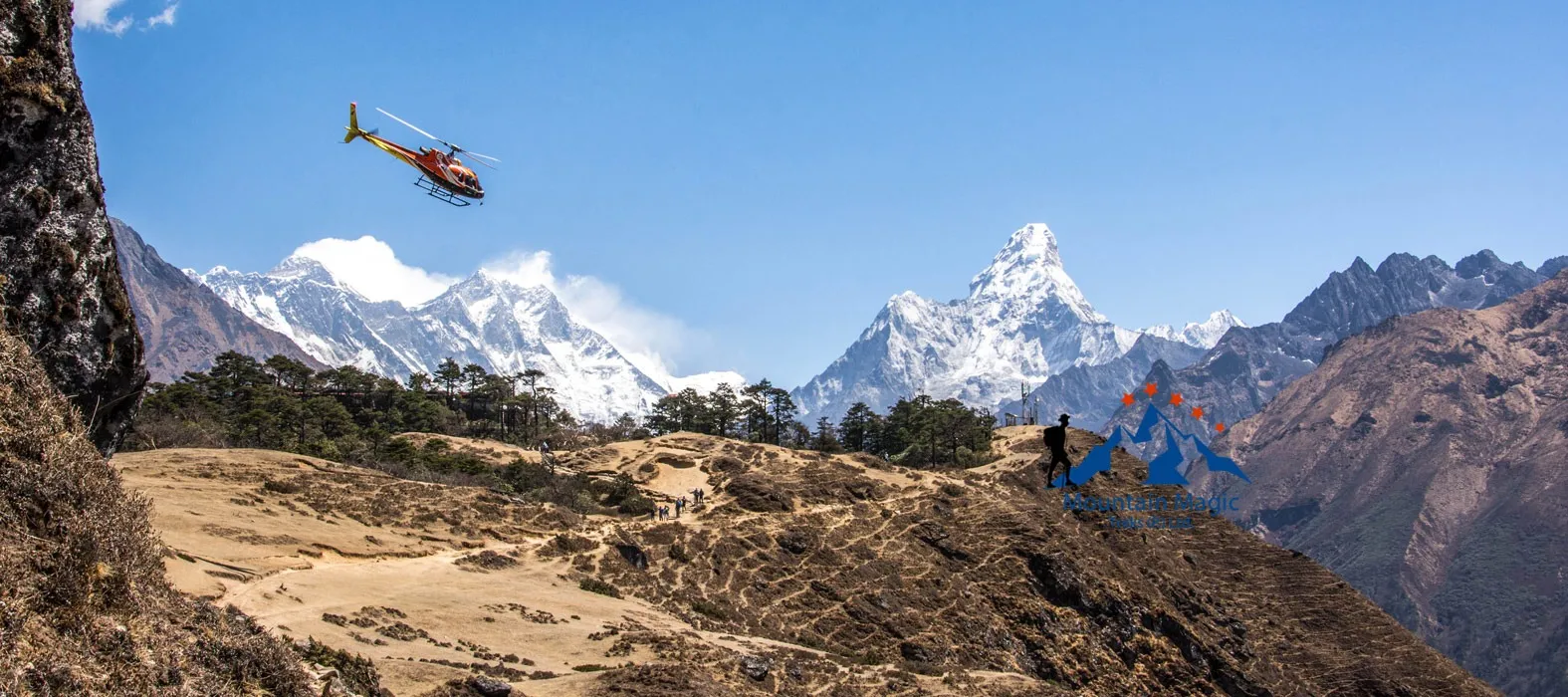
Many people imagine Everest as a destination.
They picture standing at Base Camp, taking a few photographs, and saying they made it.
But the journey to that point is much longer than one moment.
The trail passes through villages, forests, rocky valleys, high mountain terrain, and places where the landscape seems almost endless. The Everest Base Camp Trek With Helicopter Return gives you the chance to experience that journey on foot before taking a different route home through the sky.
The key is not to rush through it.
Start by Forgetting the Clock
Daily life teaches us to measure everything by time.
How quickly can you finish work?
How fast can you reach somewhere?
How much can you fit into one day?
The mountains work differently.
A trail takes the time it takes.
A climb may be slower because of altitude. A break may become longer because the view is worth enjoying. Weather may change your plans.
Trying to control every minute can make the trek more stressful than it needs to be.
Give Yourself Permission to Stop
Stopping does not mean you are weak.
You may want to catch your breath, adjust your backpack, drink water, or simply look at the mountains.
Take the break.
You are not wasting the journey.
You are experiencing it.
Let Your Body Find Its Rhythm
The first few walking days can feel strange.
Your legs may be fine, but your routine is different.
You are walking for hours instead of exercising for a fixed period.
As the route gets higher, the altitude adds another challenge.
Your natural pace may become slower.
That is expected.
Do Not Compete With Other Trekkers
You may meet someone who walks faster than you.
Let them go.
You are not racing.
Another trekker may be carrying less weight. They may have more experience. They may simply have a different natural pace.
Your job is to manage your own energy.
A steady pace can take you farther than a fast start followed by exhaustion.
Look at the Villages, Not Just the Peaks
It is easy to spend the entire trek searching for Everest.
That would mean missing much of the journey.
The villages are an important part of the experience.
You see homes, shops, lodges, prayer flags, monasteries, fields, and people going about daily life.
These details show you that the Everest region is not simply a trekking destination.
It is home.
Be a Respectful Visitor
A few simple habits matter.
Ask before photographing people.
Keep your voice low around religious places.
Do not leave rubbish behind.
Respect signs and local customs.
You are walking through communities, not through a theme park.
Make the Acclimatization Days Count
Acclimatization can be one of the least exciting words in a trekking plan.
It is also one of the most important.
The route includes time to adjust at places such as Namche Bazaar and Dingboche.
You may not cover a huge distance on these days.
That is intentional.
Your body needs time to adapt before you continue higher.
Rest Does Not Mean Doing Nothing
An acclimatization day can include a short walk, exploring the local area, or simply relaxing.
The important thing is not to turn the day into another exhausting adventure.
You are preparing for the higher sections ahead.
Think of rest as training for tomorrow.
Save Your Energy for the High Country
As the trail moves toward Lobuche and Gorakshep, the environment becomes more demanding.
The air is thinner.
The landscape becomes more exposed.
The weather can feel colder.
At this point, every unnecessary effort can matter.
You may be tempted to walk quickly because you are excited about reaching Base Camp.
Resist that urge.
The Everest Base Camp Trek With Helicopter Return still requires patience during these final trekking days.
Base Camp Is Better When You Have Energy Left
Imagine reaching Base Camp completely exhausted.
You may take your photograph, but you might not have the energy to appreciate the moment.
A better approach is to manage yourself throughout the journey.
Keep eating.
Drink water.
Take sensible breaks.
Walk at a controlled pace.
Then, when you finally reach Base Camp, you can actually stop and take it in.
Look around.
You made it.
Do Not Ignore the Moments Between Major Stops
Travelers often focus on named places.
Namche.
Tengboche.
Dingboche.
Lobuche.
Gorakshep.
Everest Base Camp.
But the spaces between them can be just as memorable.
A quiet trail.
A mountain appearing between clouds.
A bridge over a deep river.
A warm cup of tea during a cold afternoon.
A conversation with another trekker.
These are the small pieces that eventually become one big memory.
Kala Patthar Is Worth More Than a Photograph
Kala Patthar offers one of the highest viewpoints on the route, reaching around 5,545 meters.
The climb can be tough because of the elevation.
But once you reach the viewpoint, the surrounding mountains open up.
This is a good place to slow down.
Do not immediately reach for your phone.
Look first.
Take in the view.
Then take your photographs.
You will remember the experience better if you actually experience it.
The Helicopter Creates a Completely Different Ending
After days of walking, sitting inside a helicopter feels almost strange.
Your feet have been doing the work.
Now the landscape moves beneath you.
The Everest Base Camp Trek With Helicopter Return gives you a final perspective that you cannot get while walking.
From above, trails look tiny.
Villages become small dots.
Valleys reveal their full shape.
The mountains seem even larger because you can finally see how far they stretch.
Do Not Treat the Flight Like Just Transportation
Look outside.
Try to recognize places you walked through.
Think about how long it took you to cover those distances.
Now they pass below you in a completely different way.
The flight can feel like a summary of the entire trek.
Keep Your Plans Flexible
Mountain travel does not always follow a fixed schedule.
Weather can affect walking conditions and helicopter operations.
If your flight is delayed, stay patient.
Keep important travel plans flexible where possible.
Do not schedule a major connection immediately after your expected helicopter arrival unless you have enough backup time.
A little planning can save a lot of stress.
Leave Space for Unexpected Moments
The best memory of your trip may not be the one you planned.
You may remember a sunrise.
A funny conversation.
A quiet tea house.
A dog following the group for part of the trail.
A sudden clear view of a peak after hours of clouds.
These moments cannot be added to an itinerary.
You have to leave enough mental space to notice them.
FAQs
Is the Everest trek only about reaching Base Camp?
No. The villages, cultural sites, landscapes, acclimatization days, and daily trail experience are all important parts of the journey.
How can I avoid getting too tired?
Keep a steady pace, take sensible breaks, eat regularly, stay hydrated, and avoid unnecessary effort.
Should I worry if another trekker is faster?
No. Everyone has a different pace. Focus on maintaining a comfortable rhythm that works for you.
Why is Kala Patthar included?
It provides a high viewpoint with broad mountain views and reaches roughly 5,545 meters.
Does the helicopter return mean there is no long trek?
No. The main journey to the high mountain areas is still completed on foot. The helicopter changes the return portion.
Conclusion
The Everest Base Camp Trek With Helicopter Return becomes more enjoyable when you stop treating it like a checklist.
Do not rush from one destination to another.
Walk slowly enough to notice the landscape.
Take time in the villages.
Respect the people who call the region home.
Rest when your body needs it.
And when you finally reach the high points, give yourself time to appreciate where you are.
The helicopter will eventually take you away from the mountains.
But if you have not rushed the journey, you will leave with much more than a photograph of Everest.
You will remember the trail itself.
